NEW NOVEL
What Goes on Tour
Enter the world of professional cycling in the 1970s, with a story of feuds, shady deals, betrayals and secrets buried by the sport’s unwritten code of silence. When race leader, Harry Chatham, is killed on the penultimate day of the 1977 Tour de France, his death is written off as an unfortunate accident. More than thirty years later, the son Harry never knew sets out to find the truth but discovers a secret that, if revealed, would be devastating for the people he loves. Should he reveal the truth - or accept that what goes on tour stays on tour?
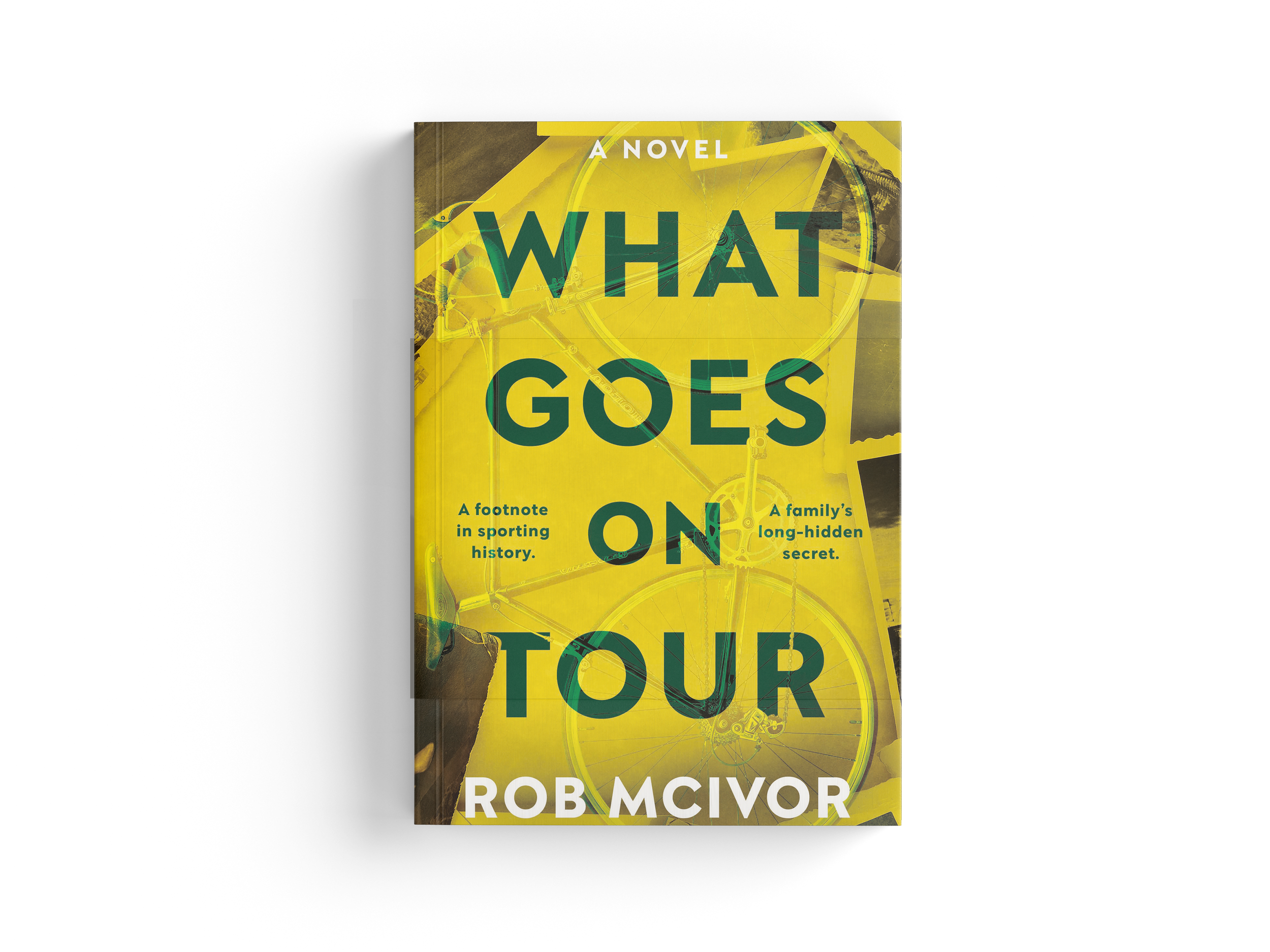
Published on 28th May 2026
Buy it here:



or from any good bookshop
WHAT GOES ON TOUR - PROLOGUE
BRUNISSARD, COL D’IZOARD, FRANCE, SEPTEMBER 19, 2024
Luc Barguil finishes polishing the wine glasses and circles the table, carefully checking everything is in order. The lunch guests will soon be here. He knows how important this day is for them and why they have chosen his restaurant, halfway up the mountain road, as their venue.
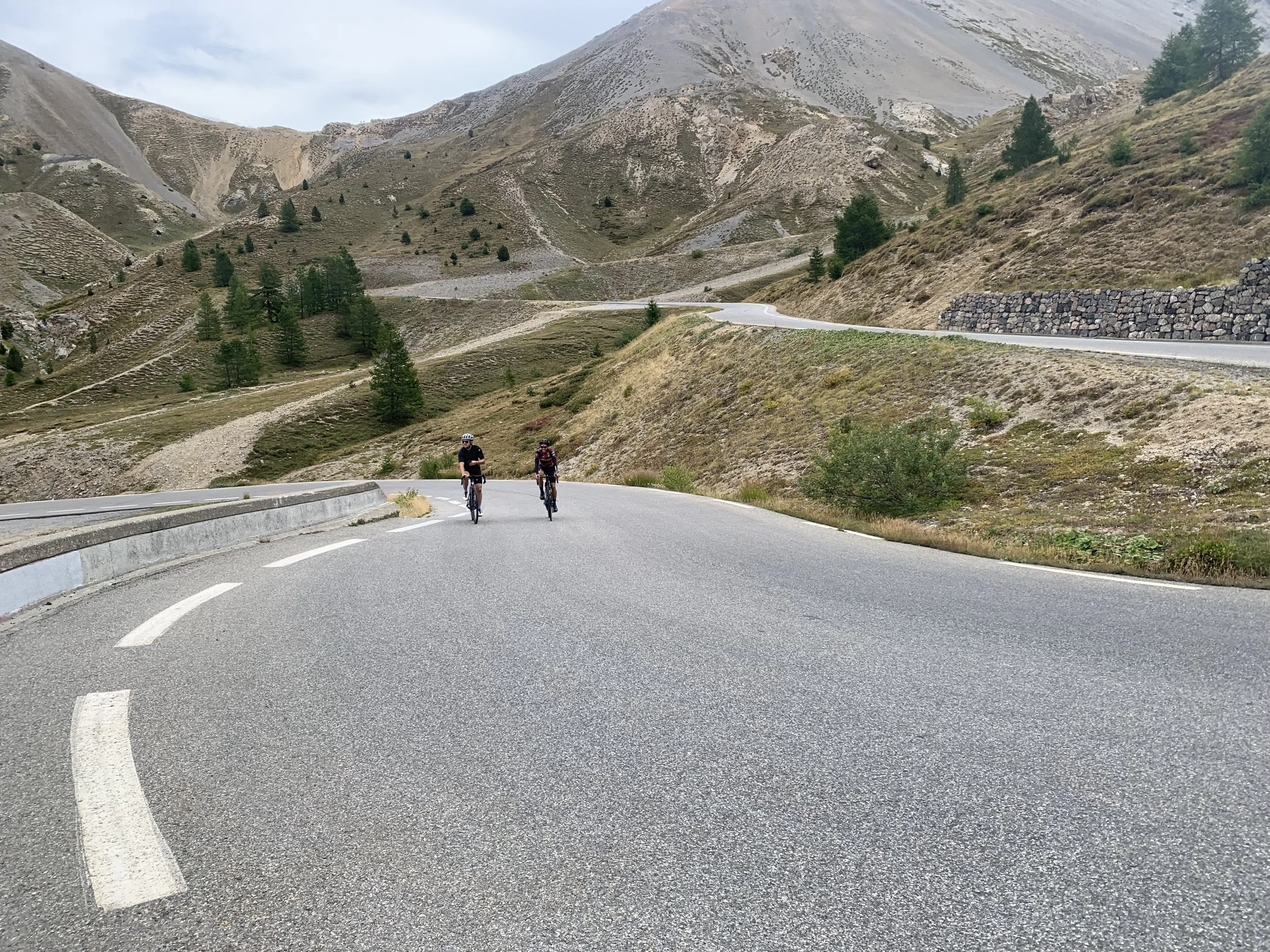
While his wife and daughter clatter in the kitchen, he steps out into the late summer sun and peers up the road. There’s no sight of them yet. A trio of cyclists, stick-thin in brightly coloured clothes, nod a silent greeting as they climb slowly past. Otherwise, the road is empty.
Back inside, Luc scans the photographs that line the restaurant walls. The most recent, dated just a few years earlier, is a riot of colour, the image crisp in its digital clarity. The oldest is less distinct, in shades of reddish-brown and grey. His great-grandfather, Henri, took it, leaning out of the window of their apartment above the restaurant a little over a century ago, when the Tour de France first crossed this mountain. A lone cyclist, spare tyre twisted across his shoulders, grinds his way up the dirt road, baked-dry dust clouding up from his wheels. A few figures stand at the side, applauding his effort. Further down the mountain, another two riders are barely visible amidst their own dust clouds. The photograph is signed ‘Philippe Thys’, the man who led the race over the summit that day, fruitlessly seeking a fourth Tour victory.
Along the wall, other photographs mark every time the Tour has chosen this mountain climb, the Col d’Izoard, as one of its battlegrounds. As the years pass, and the sepia gives way to monochrome and then colour, the roadside spectators grow from a small group politely acknowledging the cyclists’ effort to a heaving, riotous mass with banners and flags, cheering, jeering and even running alongside the riders in their attempts to encourage their favourites or distract their rivals. Each photograph is dated and autographed by Thys’s successors as first man over the summit: Bartali; Coppi; Bobet; Merckx, of course; and more than two dozen others.
Each photograph but one.
The black-and-white photograph behind the seats for today’s guests of honour has no signature, only the date: July 23, 1977. Instead of the road outside the restaurant, it shows the very top of the climb, some nine kilometres further up the mountain, in the area known as La Casse Deserte, where volcanic boulders are scattered around like the debris of a slingshot fight between God and the Devil.
Even the most hardened professionals know they must suffer to reach that barren terrain. On a July afternoon, heat penetrates their lungs and viciously plunders the last molecules of oxygen, while the tarmac crackles like the electricity in the power lines overhead and drags on the rubber tyres. After 180 kilometres, with two mountains already conquered, their legs feel as though their shoes are weighted with concrete.
The Izoard hurts.
Luc can see it in the faces of the riders in the photo, grim from the effort and grimy from the dust of the hot road. They reveal the anticipation that the descent ahead, eighteen hurtling kilometres into the centre of Briançon, more than a thousand metres below, will decide the winner of the day’s race and the 1977 Tour de France itself.
Before then, gravity will conspire with the winding road to challenge them one final time. The final fling downhill, with its hairpin turns and rolling cambers, will be every bit as hard as the climb. Too much caution and rivals will escape. Too fast into a bend and the force of nervous braking will throw a rider off his line. Thirty metres can be lost in seconds. Two riders’ wheels touching at eighty kilometres an hour could take both off the road.
The front four riders look nervous as they reach to take newspapers, offered by spectators, to stuff down their sweat-soaked jerseys as insulation from the rushing air that will fillet them on the way down. Yet, just behind them, the rider whose signature is absent from the photograph exudes complete serenity. His eyes are wide open, clear, focused, calm. He’s moving back slightly on the saddle, bringing his chest down over the crossbar, anticipating the need to make body and bike as aerodynamic as possible. His fingers are reaching to cradle the brake levers. On the way down he will caress them, like a thoughtful lover. He knows every turn ahead - where to give those strokes and where to lean the bike without braking. In a moment, to his rivals’ surprise, he will accelerate away, passing the summit marker in first place.
Harry Chatham is twenty-six years old and at his peak. Feted by the French press as ‘Le Grand Descendeur’, all he needs to do to become the first Englishman to win the Tour de France is keep his rivals at bay on this descent.
For many years, Luc hung an empty frame on the wall between the pictures from 1975 and 1986, when the Tour finally returned to the Izoard. It had taken him a long time to find his photographs from that day, in the basement among the accumulated clutter of four generations of Barguils running their family restaurant, but from the moment he had learnt who would be present today, Luc had known that now was the right time for one to take its place alongside those of the great champions.
He pauses in front of the photograph, looks into Harry’s eyes and wonders what would have been going through his mind at that moment.
He would have known no one on the road that day could guide a bicycle downhill as quickly as him.
He would have known that tomorrow he should be leading the race into Paris wearing the winner’s yellow jersey.
He couldn’t have known that in a little over two minutes he would be dead.
Or that it would take more than thirty years to uncover the truth about why he died.
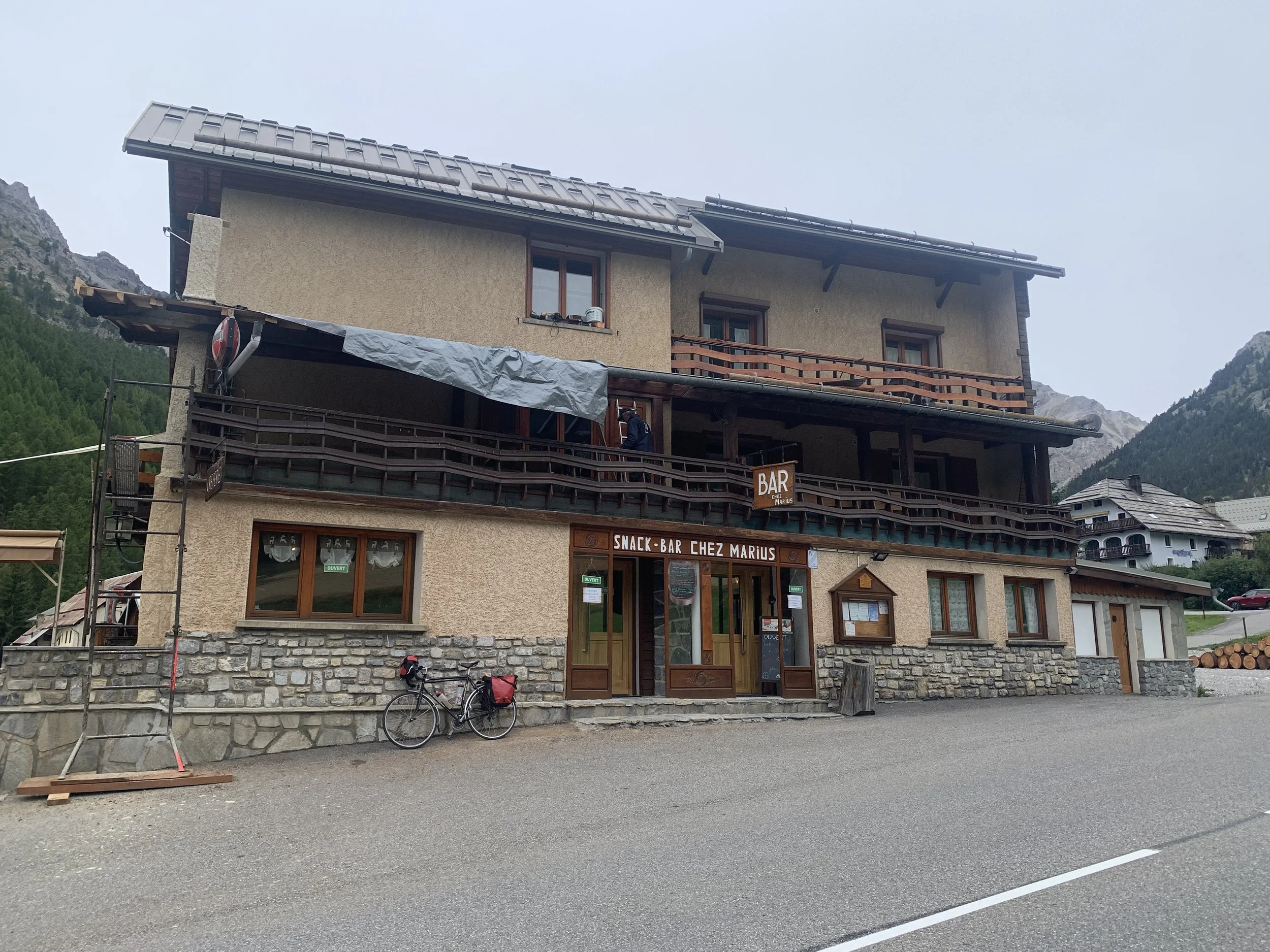
The ‘real’ Café Barguil, Brunissard, serving delicious lunches and high-octane coffee for the climb ahead.
(Bicycle author’s own)
Children of the Moon
Children of the Moon was first published in Endless Pictures, a collection of the winners of the 2020 TL;DR 1,000 Word Herd competition. The Kindle version of the anthology is available on Amazon for $2.99.
Late Lunch
Late Lunch first appeared in the Ellipsiszine collection, She Cries Honey. This is no longer in print but I have heard that copies do turn up from time to time in second-hand bookshops and it’s worth picking up as it contains some beautiful short stories, along with mine.
Voiceless
Voiceless first appeared in another TL;DR collection, this time purely of horror stories, Nope 2. Again, available on Amazon in both digital and paperback formats.
Power Play
Power Play made its debut in issue 9 of Lucent Dreaming magazine. Again, I think printed copies are sold out but you can download a digital copy here.